Kinetic Microrobotics
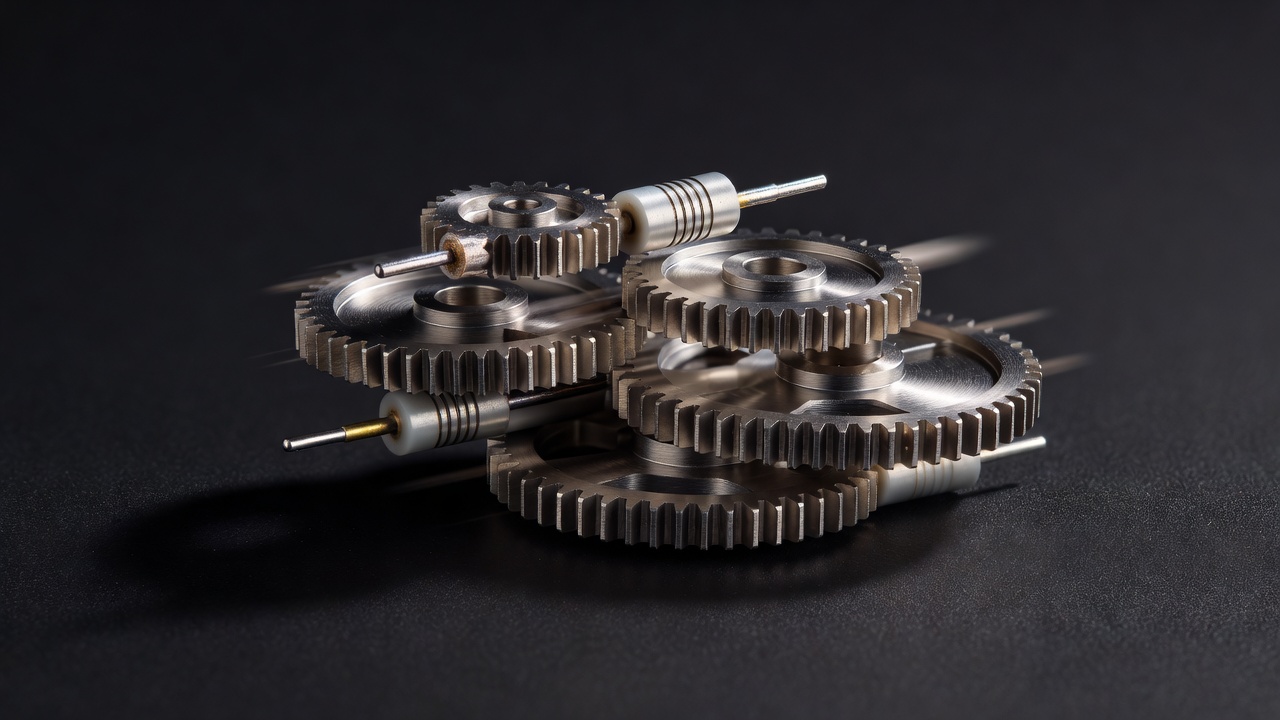
At dimensions below 500 microns, the fundamental laws of classical mechanical propulsion invert. Viscous fluid drag, surface tension, and electrostatic Van der Waals forces dominate over inertia and gravity. Engineering kinetic robots at this scale requires discarding rotary electromagnetic motors in favor of electrostrictive and piezoelectric thin-film actuators.
1. Piezoelectric Lead-Zirconate-Titanate (PZT) Actuators
By depositing sub-micron layers of PZT on flexible silicon nitride cantilevers, researchers induce mechanical displacement through high-frequency acoustic resonance. These micro-cantilevers flap or oscillate at frequencies exceeding 25 kHz, generating propulsive lift or crawler displacement at speeds up to 14 body-lengths per second.
Recent laboratory trials demonstrate micro-machined grippers capable of lifting specimens weighing more than 80 times their own mass, paving the way for targeted micro-surgical robotics and autonomous structural monitoring inside sealed semiconductor cleanrooms.
| Actuation Model | Stroke Displacement | Response Time | Power Coupling |
|---|---|---|---|
| Thermal Shape Memory (SMA) | High (> 15%) | Slow (150 ms) | Joule Resistance Heating |
| Magnetic Torque Guidance | External dependent | Moderate (30 ms) | External Helmholz Coils |
| Resonant Piezoelectric Thin-Film | Ultra-precise (1.2%) | Sub-millisecond (0.04 ms) | Far-field RF Inductive Coupling |
2. Wireless Power & Optical Guidance Arrays
Carrying onboard chemical storage cells is physically impossible on a 250-micron substrate. Modern kinetic microrobots rely instead on far-field electromagnetic coupling or direct onboard microscopic solar arrays illuminated by infrared tracking lasers.
Engineers at ETH Zurich and EPFL have integrated miniature photovoltaic cells (measuring only 120 x 120 microns) capable of generating 1.8 volts under focused 850nm laser irradiation, sufficient to drive onboard CMOS relaxation oscillators and drive circuits.
3. Industrial and Medical Realities
The immediate deployment pathway for kinetic microrobotics is not autonomous open-world deployment, but localized industrial inspection within sealed microfluidic valves, avionics cooling conduits, and in-vivo targeted drug delivery trials under rigorous bio-ethical oversight.
Compare Prototype Parameters
Compile technical displacement metrics into an exportable hardware specification.
Review Prototype Specs